

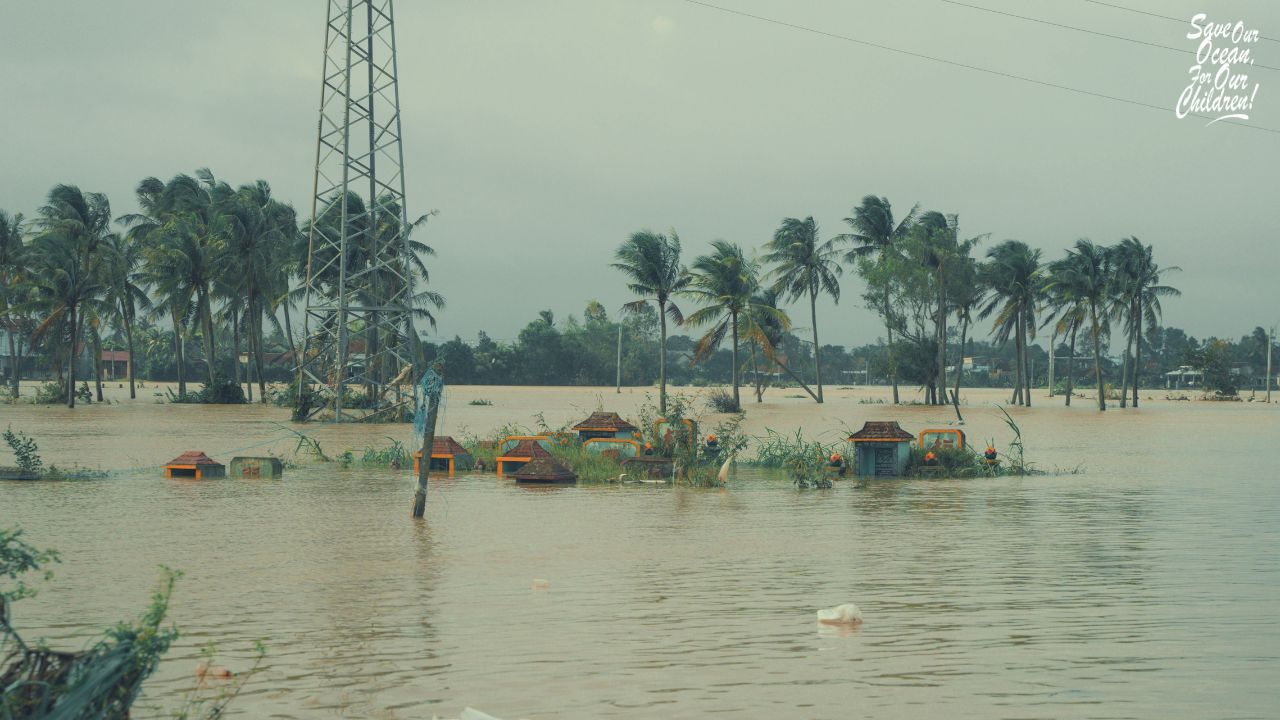
Climate change is no longer a distant threat. It is already reshaping lives, coastlines, and ecosystems across the globe. According to leading scientific and economic analysis, the world is currently on a trajectory toward 3°C of global warming by the end of this century. That number may sound abstract, but its consequences are not.
A 3°C world has no safe place.
This is why Earthshore exists. This is why Earthshore promotes slowing down climate change. And this is why saving our ocean for our children is not a slogan—it is an urgent responsibility.
What Does a 3°C World Mean?
A 3°C world means the planet’s average temperature rises three degrees above pre-industrial levels. This does not translate to “slightly warmer days.” It means a fundamentally more dangerous and unstable Earth.
In a 3°C world:
- Extreme heatwaves become routine, not rare
- Floods grow more intense and destructive
- Droughts last longer and affect food systems
- Wildfires spread faster and burn hotter
- Sea levels rise enough to threaten coastal cities and islands
The disasters we see today—record floods, massive wildfires, lethal heat—are not anomalies. They are early signals of what becomes normal if warming continues unchecked.
There is no geographic safe haven. No country, rich or poor, can fully escape these risks.
Why 3°C Is Especially Dangerous
Scientific assessments consistently show that climate impacts do not increase linearly. They accelerate.
Beyond 1.5°C to 2°C of warming, climate systems begin to behave in more extreme and unpredictable ways. At 3°C:
- Heat and humidity in many tropical regions can reach levels dangerous to human survival
- Rainfall intensifies, overwhelming drainage systems and flooding cities
- Droughts and fires expand into regions historically considered low-risk
- Marine ecosystems face widespread collapse
This is not a future of isolated disasters—it is a future of compound crises, where heat, floods, food shortages, and displacement reinforce one another.
Why “No Safe Place” Is Not an Exaggeration
The idea that some regions will be “winners” under climate change is misleading.
Even countries with advanced infrastructure face hard limits:
- Flood defenses fail beyond certain thresholds
- Insurance systems collapse under repeated losses
- Power grids and water systems strain under extreme heat
- Ecosystems that support agriculture and fisheries degrade beyond recovery
At 3°C, adaptation capacity is stretched beyond historical experience. This is why experts warn that adaptation alone cannot make a 3°C world safe.
Adaptation Helps—but It Has Limits
Adaptation includes actions such as:
- Seawalls and flood barriers
- Heat-resilient infrastructure
- Early warning systems and evacuation plans
- Climate-adaptive farming
These measures reduce harm and save lives. But they do not eliminate risk.
No seawall can permanently protect low-lying coastlines as oceans rise. No system can fully compensate for collapsing ecosystems. And many vulnerable communities lack the financial and institutional capacity to adapt at the scale required.
This reality reinforces Earthshore’s core belief: slowing down climate change is essential.
Why Earthshore Promotes Slowing Down Climate Change
Earthshore promotes slowing down climate change because every fraction of a degree matters.
The difference between 1.5°C, 2°C, and 3°C is measured in:
- Lives lost or saved
- Communities displaced or protected
- Ecosystems preserved or destroyed
- Futures secured—or stolen—from our children
Slowing climate change reduces the intensity of storms, limits sea-level rise, and gives both people and nature a fighting chance to adapt.
The Ocean at the Center of the Crisis
The ocean absorbs over 90% of excess heat and a large share of carbon emissions. It is Earth’s greatest climate regulator—and its most vulnerable system.
In a 3°C world:
- Coral reefs face near-total collapse
- Fisheries decline, threatening food security
- Coastal erosion accelerates
- Marine biodiversity suffers irreversible losses
This is why Earthshore’s mission to save our ocean for our children is inseparable from climate action.
Healthy oceans mean healthier climates. Polluted, degraded oceans accelerate warming and amplify risk.
Inequality: The Hidden Multiplier
Climate change is not experienced equally.
Low-income communities and developing countries face the highest exposure to floods, heat, and food insecurity—while having the least resources to adapt. Climate disasters deepen poverty, disrupt education, and force migration.
This injustice is central to Earthshore’s work. Saving our ocean for our children also means protecting the most vulnerable families today.
Tipping Points We Cannot Undo
At warming near 3°C, scientists warn of increased risk of climate tipping points:
- Irreversible ice-sheet loss
- Rapid permafrost thaw releasing more greenhouse gases
- Collapse of coral reef ecosystems
Once crossed, these changes cannot be reversed on human timescales. They lock in further warming and damage.
This is why delay is so dangerous—and why Earthshore acts now.
Why Earthshore Acts Locally to Protect a Global Future
Earthshore believes climate action must be personal, practical, and visible.
Through massive beach cleanups, plastic reduction, and education—especially for children—Earthshore tackles climate change at its roots:
- Cleaner beaches mean less plastic entering the ocean
- Healthier oceans absorb less heat stress
- Educated communities make sustainable choices
- Children grow up as stewards, not victims
This is how Earthshore promotes slowing down climate change—by turning awareness into action.
A Final Message: The Future Is Still a Choice
A 3°C world is not inevitable—but it is possible if action stalls.
The science is clear. The risks are global. And the cost of inaction will be paid by our children.
Earthshore stands for one simple truth:
Saving our ocean for our children is saving our future.
By slowing down climate change today, we protect lives, livelihoods, and ecosystems tomorrow. There may be no safe place in a 3°C world—but there is still time to choose a safer one.
This is Earthshore’s mission.
Learn more: www.earthshore.org