

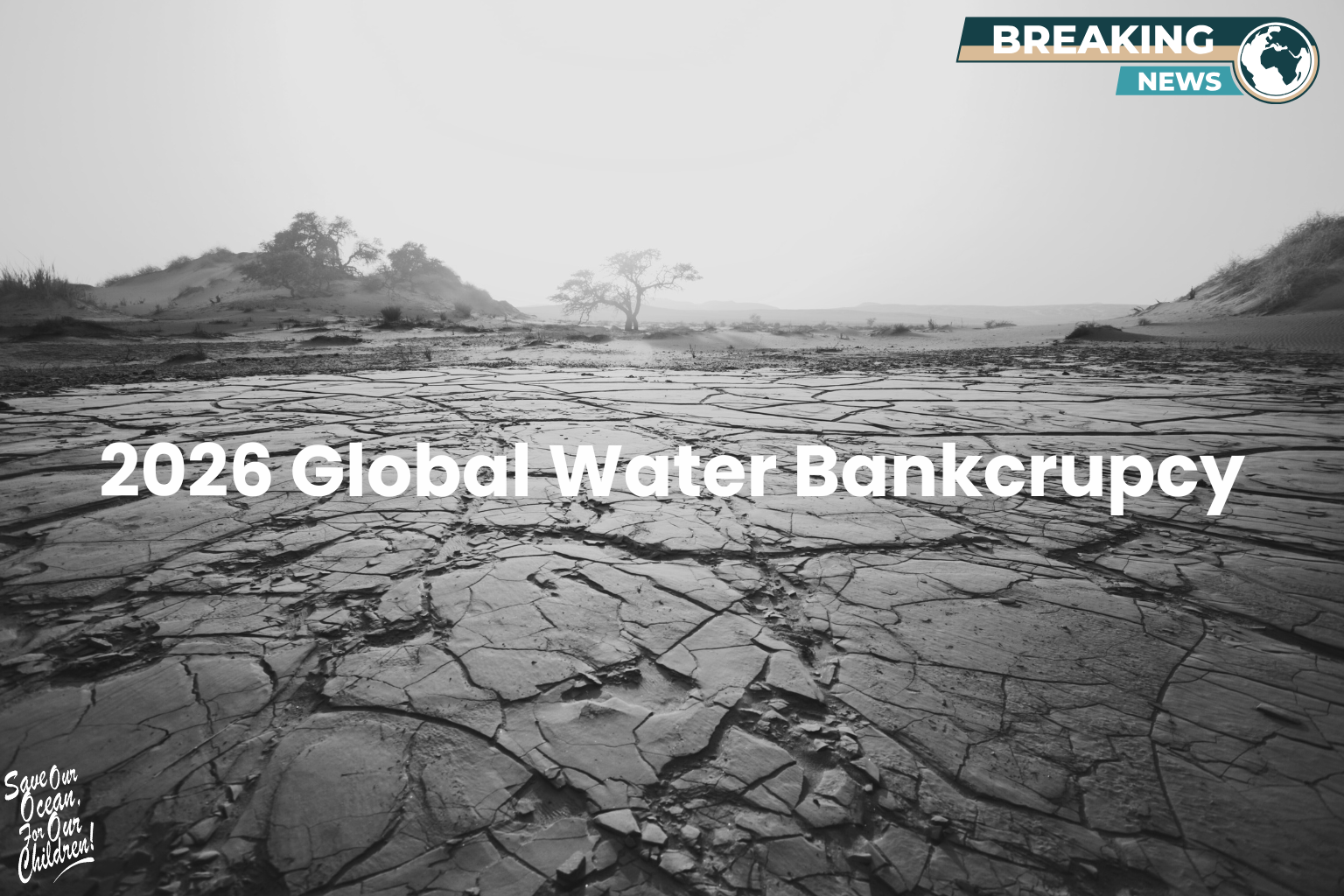
The world is running out of water—but not just drinking water. According to a new United Nations report, we have entered an era called Global Water Bankruptcy. This means humans are using water faster than nature can replace it, damaging rivers, wetlands, and oceans in ways that cannot fully recover.
This warning was shared by the UN and explained by Kaveh Madani, Director of the United Nations University Institute for Water, Environment and Health. He says we are “living beyond our hydrological means,” meaning we are overspending nature’s water savings.
This is exactly why saving our ocean for our children must start now—and why beach cleaning is more powerful than many people realize.
(Source: UN News – Jan 2026
https://news.un.org/en/story/2026/01/1166800
Kaveh Madani: https://www.linkedin.com/feed/update/urn:li:activity:7420171086304100352/)
What Is Global Water Bankruptcy (In Simple Terms)?
Think of Earth’s water like a bank account.
- Rain, rivers, and clean groundwater are the income
- Aquifers, wetlands, and glaciers are the savings
- Pollution and overuse are withdrawals
Right now, humans are taking out more than nature can put back.
Even if floods happen, or it rains more some years, the damage underneath continues. Lakes shrink. Wetlands disappear. Polluted water flows straight to the sea.
And that’s where the ocean comes in.
Why Beach Cleaning Actually Helps the Water Crisis
Many people think beach cleanups are “just cosmetic.” They are not.
Beach cleaning helps stop water bankruptcy in three critical ways:
- It prevents pollution from re-entering the ocean
Trash on beaches doesn’t stay there. Tides pull it back into the sea, where it breaks into microplastics and enters the food chain. - It protects coastal ecosystems
Mangroves, wetlands, and shorelines act like natural water filters. When trash smothers them, they stop protecting the ocean and nearby communities. - It reveals where the system is broken
The dirtiest beaches show where rivers, drainage systems, and waste management are failing upstream.
This is why Earthshore focuses on cleaning the dirtiest beaches—before pollution spreads further into the ocean.
The Ocean Is Downstream of Everything
Water connects everything. What happens on land always ends up in the sea.
When rivers dry up, they can’t flush pollution.
When wetlands disappear, they can’t filter waste.
When groundwater is polluted, it eventually leaks into coastal waters.
That’s why saving our ocean for our children means acting on land, not just at sea.
Earthshore believes beach cleaning is a frontline defense—stopping pollution at the last point before it becomes permanent ocean damage.
Three Actions That Truly Make a Difference
Here’s how communities can help right now:
- 🧹 Clean beaches and coastlines to stop trash from cycling back into the ocean
- 🌱 Protect wetlands and mangroves that clean water naturally
- 📚 Educate people so they understand how land and ocean are connected
These actions turn awareness into real protection.
This Is About Our Children and Our Future
The UN report makes it clear: water bankruptcy hurts children, small communities, and future generations the most. They did not cause this problem—but they will live with the results.
That is why saving our ocean for our children is about responsibility, not blame.
Earthshore was created to protect the ocean before it’s too late. Through education, awareness, and hands-on action, Earthshore works to stop pollution where it begins—and where it ends.
Because Earthshore believes a clean ocean should not be a privilege.
Because Earthshore believes children deserve a future with clean water, living oceans, and healthy coastlines.
Saving our ocean for our children starts with action—one beach at a time.
Learn more: www.earthshore.org